




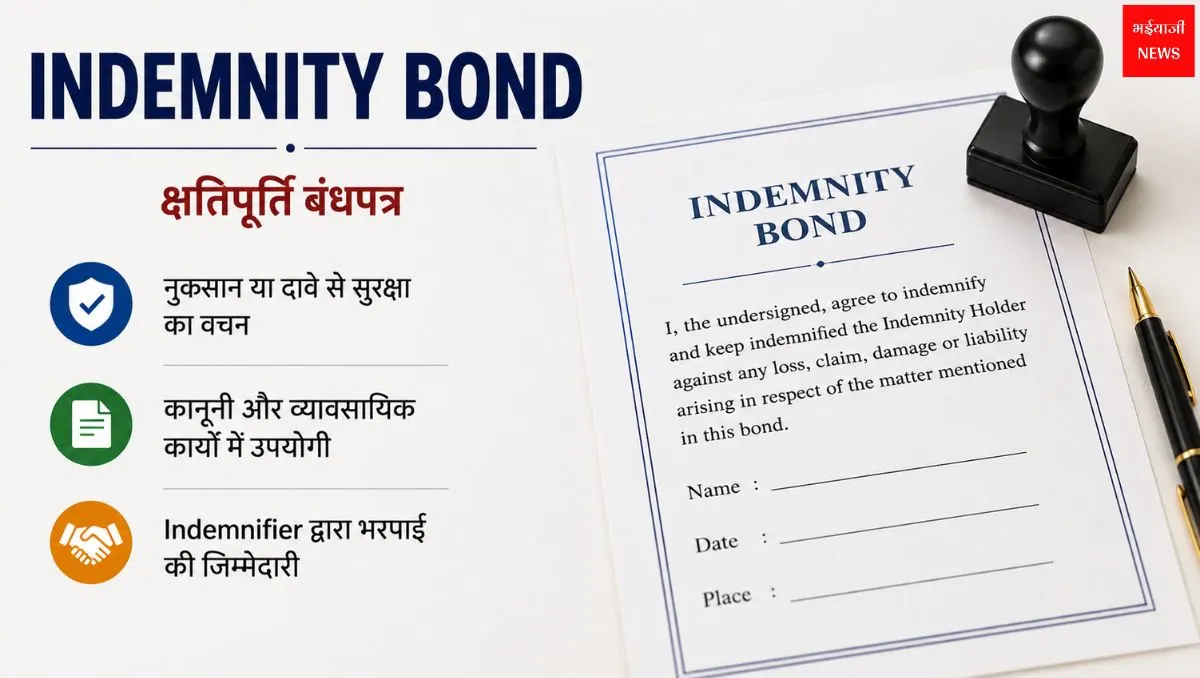

Indemnity Bond यानी क्षतिपूर्ति बंधपत्र एक महत्वपूर्ण कानूनी दस्तावेज है, जिसके माध्यम से एक व्यक्ति या संस्था दूसरे व्यक्ति/संस्था को किसी निश्चित नुकसान, दावे, देनदारी या कानूनी liability से होने वाले नुकसान की भरपाई करने का वादा करती है। इसका इस्तेमाल बैंकिंग, सरकारी काम, property documents, employment, business, contracts और कई अन्य परिस्थितियों में किया जा सकता है।
सरल भाषा में समझें तो Indemnity Bond एक तरह का सुरक्षा वचन होता है, जिसमें एक पक्ष यह जिम्मेदारी लेता है कि यदि उसकी वजह से दूसरे पक्ष को निर्धारित प्रकार का नुकसान होता है, तो वह उसकी भरपाई करेगा।
भारत में indemnity का कानूनी आधार Indian Contract Act, 1872 की Section 124 में मिलता है। Section 124 के अनुसार, जब एक पक्ष दूसरे पक्ष को स्वयं promisor या किसी अन्य व्यक्ति के conduct से होने वाले नुकसान से बचाने का वादा करता है, तो इसे contract of indemnity कहा जाता है।
Indemnity Bond क्या है?
Indemnity Bond एक written undertaking/document होता है जिसमें Indemnifier दूसरे पक्ष यानी Indemnified/Indemnity Holder को किसी निर्धारित loss या liability से सुरक्षित रखने की जिम्मेदारी लेता है।
इसमें आमतौर पर तीन चीजें महत्वपूर्ण होती हैं:
- किस व्यक्ति/संस्था को सुरक्षा दी जा रही है
- किस प्रकार के नुकसान की भरपाई की जाएगी
- नुकसान होने पर किसकी जिम्मेदारी होगी
आसान उदाहरण
मान लीजिए किसी व्यक्ति के original property documents खो गए हैं और उसे किसी सरकारी या financial process में duplicate/certified documents की आवश्यकता है। संबंधित संस्था उससे ऐसा bond मांग सकती है जिसमें वह यह undertaking दे कि भविष्य में original document से संबंधित कोई claim या नुकसान उत्पन्न होने पर वह संस्था को indemnify करेगा।
यानी:
नुकसान/दावा हुआ → Bond में दी गई शर्तें लागू हुईं → जिम्मेदार पक्ष compensation/indemnification की जिम्मेदारी ले सकता है।
Indemnity का कानूनी अर्थ क्या है?
Indian Contract Act, 1872 की Section 124 में “Contract of Indemnity” की definition दी गई है। इसके अनुसार एक party दूसरी party को promisor या किसी अन्य व्यक्ति के conduct से होने वाले loss से बचाने का promise करती है।
Section 125 indemnity-holder के कुछ rights से संबंधित है। इसमें निर्धारित परिस्थितियों में damages, certain legal costs और qualifying compromise के तहत paid sums recover करने का प्रावधान है।
इसलिए Indemnity Bond केवल एक सामान्य declaration नहीं है। इसकी legal wording और conditions महत्वपूर्ण होती हैं।
Indemnity Bond का इस्तेमाल कहां होता है?
Indemnity Bond का उपयोग अलग-अलग परिस्थितियों में हो सकता है।
1. खोए हुए Documents के मामले में
अगर कोई important document खो गया है, तो कुछ institutions replacement या alternative process के लिए indemnity bond मांग सकती हैं।
2. Bank में
Banking transactions में indemnity undertaking का इस्तेमाल कुछ specific situations में किया जा सकता है।
उदाहरण:
- Lost document
- Duplicate instrument
- Certain claims
- Document-related risk
- Specific banking transactions
हालांकि exact requirement bank की policy पर निर्भर करती है।
3. Property के मामलों में
Property transaction में document loss, ownership-related claims या specific contractual risks के लिए indemnity clause/bond का इस्तेमाल हो सकता है।
4. Government Department
कुछ सरकारी applications या procedures में applicant से indemnity bond/undertaking मांगी जा सकती है।
5. Business Contracts
Companies अपने contracts में indemnity clause शामिल कर सकती हैं।
उदाहरण के लिए, यदि किसी service provider की गलती से client को defined financial loss होता है, तो contract में indemnification की terms हो सकती हैं।
6. Employment और Professional Services
कुछ specific employment या professional arrangements में भी indemnity undertaking देखने को मिल सकती है।
Indemnity Bond में कौन-कौन लोग होते हैं?
एक सामान्य Indemnity Bond में मुख्य रूप से दो पक्ष हो सकते हैं।
1. Indemnifier
यह वह व्यक्ति होता है जो नुकसान की भरपाई करने की जिम्मेदारी लेता है।
2. Indemnity Holder
यह वह व्यक्ति या संस्था होती है जिसे indemnity दी जा रही है।
उदाहरण:
रमेश ने बैंक को Indemnity Bond दिया।
यहां:
- रमेश = Indemnifier
- Bank = Indemnity Holder
यदि bond की applicable conditions के तहत कोई covered loss उत्पन्न होता है, तो रमेश की liability bond की terms और applicable law के अनुसार तय हो सकती है।
Indemnity Bond और Guarantee में अंतर
इन दोनों documents को अक्सर एक जैसा समझ लिया जाता है, लेकिन दोनों अलग concepts हैं।
Indian Contract Act की Section 126 में contract of guarantee की definition दी गई है। Guarantee में surety किसी third person यानी principal debtor की default liability को discharge करने का promise करता है।
| Indemnity | Guarantee |
|---|---|
| Loss से बचाने/भरपाई करने का promise | Third person के default पर liability fulfill करने का promise |
| सामान्यतः indemnifier और indemnity holder मुख्य parties | Principal debtor, creditor और surety की भूमिका |
| Loss/liability protection पर focus | Default की स्थिति पर focus |
| Section 124 से संबंधित | Section 126 से संबंधित |
इसलिए Indemnity Bond और Guarantee Bond को बिना समझे एक-दूसरे के स्थान पर इस्तेमाल नहीं करना चाहिए।
Indemnity Bond और Affidavit में अंतर
Affidavit एक sworn statement होता है जिसमें व्यक्ति किसी तथ्य या declaration को शपथपूर्वक प्रस्तुत करता है।
वहीं Indemnity Bond में किसी संभावित loss या liability के संबंध में compensation/indemnification की जिम्मेदारी ली जाती है।
Affidavit
- Facts/declaration
- Statement
- Oath/affirmation
Indemnity Bond
- Responsibility
- Risk protection
- Loss compensation
- Defined obligations
एक ही transaction में दोनों documents की आवश्यकता हो सकती है, लेकिन दोनों का purpose अलग है।
Indemnity Bond में कौन-कौन सी जानकारी होती है?
एक अच्छी Indemnity Bond में terms स्पष्ट होनी चाहिए।
1. Title
Document के ऊपर “Indemnity Bond” लिखा जा सकता है।
2. Date और Place
Bond कब और कहां execute किया गया, इसकी जानकारी दी जाती है।
3. Indemnifier की Details
- पूरा नाम
- पिता/पति का नाम
- Address
- Identification details
4. Indemnity Holder की Details
जिस व्यक्ति या organization को indemnity दी जा रही है, उसका नाम और address।
5. Purpose
Bond किस कारण से बनाया जा रहा है, यह स्पष्ट होना चाहिए।
6. Loss/Claim की Scope
किन circumstances में indemnity लागू होगी, यह स्पष्ट रूप से लिखा जाना चाहिए।
7. Amount/Limit
जहां applicable हो, maximum liability या amount की जानकारी दी जा सकती है।
8. Undertaking
Indemnifier अपनी जिम्मेदारी और obligations स्वीकार करता है।
9. Signature
संबंधित parties के signatures होते हैं।
10. Witnesses
जहां आवश्यक या appropriate हो, witnesses के signatures और details शामिल किए जा सकते हैं।
Indemnity Bond के लिए कौन-कौन से Documents लग सकते हैं?
Exact requirements bond के purpose और संबंधित department/institution पर निर्भर करती हैं।
सामान्य तौर पर निम्न documents उपयोगी हो सकते हैं:
- Aadhaar Card/Identity Proof
- Address Proof
- PAN Card, जहां applicable हो
- Passport-size Photograph
- संबंधित application
- Original document की copy, यदि उपलब्ध हो
- Property documents, यदि property-related matter है
- Bank documents, यदि banking matter है
- संबंधित agreement/contract
- अन्य supporting documents
महत्वपूर्ण: हर Indemnity Bond के लिए एक जैसी document list नहीं होती।
Indemnity Bond कैसे बनाएं?
Indemnity Bond तैयार करने की सामान्य प्रक्रिया इस प्रकार हो सकती है:
Step 1: Purpose तय करें
सबसे पहले यह स्पष्ट करें कि bond क्यों बनाया जा रहा है।
Step 2: Parties की Details लिखें
Indemnifier और indemnity holder की सही जानकारी दर्ज करें।
Step 3: Risk/Responsibility Define करें
किस प्रकार के नुकसान या claim की responsibility ली जा रही है, उसे स्पष्ट करें।
Step 4: Terms and Conditions लिखें
Bond की अवधि, liability और अन्य conditions स्पष्ट होनी चाहिए।
Step 5: Stamp Requirement Check करें
Applicable stamp duty/stamp paper requirement state और document की nature पर निर्भर हो सकती है।
Step 6: Signatures करें
संबंधित parties और जहां आवश्यक हो witnesses के signatures लिए जाते हैं।
Step 7: Notarization/Registration Check करें
हर Indemnity Bond को एक ही तरीके से notarize या register करना जरूरी हो, ऐसा सामान्य नियम नहीं है। संबंधित authority की requirement check करनी चाहिए।
क्या Indemnity Bond Stamp Paper पर बनता है?
कई मामलों में Indemnity Bond को appropriate stamp paper/e-stamp पर execute करने की आवश्यकता हो सकती है।
लेकिन stamp duty राज्य और document की nature के अनुसार अलग हो सकती है।
Jharkhand में stamp duty से संबंधित calculation के लिए Government का NGDRS portal उपलब्ध है। Portal पर Article, District, Land Type, Anchal, Mauza/Village/Ward और transaction amount जैसे fields के आधार पर fee calculation की सुविधा दी गई है।
इसलिए किसी दूसरे राज्य में लागू stamp duty को सीधे Jharkhand में लागू मानना सही नहीं होगा।
Jharkhand में Indemnity Bond की जानकारी
Jharkhand में property और document registration से संबंधित official services के लिए NGDRS portal उपलब्ध है।
Jharkhand NGDRS Official Portal
यह portal Department of Revenue, Registration & Land Reforms, Government of Jharkhand द्वारा maintained है और इसमें registration-related services तथा stamp duty calculation जैसी सुविधाएं उपलब्ध हैं।
यदि आपका Indemnity Bond किसी property transaction, registration या stamp-related requirement से जुड़ा है, तो current requirement संबंधित office/authority से verify करना बेहतर है।
क्या Indemnity Bond की Registration जरूरी है?
इसका जवाब document के purpose और legal nature पर निर्भर करता है।
हर Indemnity Bond को automatically registered document मानना सही नहीं है।
अगर bond किसी अलग transaction से जुड़ा है जिसमें law के तहत registration compulsory है, तो उस underlying transaction की requirements अलग हो सकती हैं।
इसी तरह कुछ institutions केवल prescribed format, stamp paper या notarized undertaking मांग सकती हैं।
इसलिए:
Notarization ≠ Registration
दोनों अलग प्रक्रियाएं हैं।
किसी specific Indemnity Bond के लिए कौन-सी formalities जरूरी हैं, यह संबंधित authority की requirements देखकर तय करना चाहिए।
Indemnity Bond का Format कैसा होता है?
एक basic structure इस प्रकार हो सकता है:
INDEMNITY BOND
मैं, [नाम], निवासी [पूरा पता], यह undertaking देता/देती हूं कि [Bond का उद्देश्य] से संबंधित किसी covered claim, loss या liability के कारण [Indemnity Holder] को होने वाले नुकसान की, इस bond की terms और applicable law के अनुसार, भरपाई करने की जिम्मेदारी मेरी होगी।
मैं यह भी स्वीकार करता/करती हूं कि इस bond में दी गई जानकारी मेरी जानकारी के अनुसार सही है।
नाम: __________
पता: __________
दिनांक: __________
स्थान: __________
हस्ताक्षर: __________
Witness 1: __________
Witness 2: __________
नोट: यह केवल educational sample structure है। वास्तविक legal document के लिए संबंधित authority का prescribed format या qualified professional द्वारा तैयार draft इस्तेमाल करें।
Indemnity Bond बनाते समय किन बातों का ध्यान रखें?
1. गलत जानकारी न दें
Bond में गलत information देने से legal complications हो सकती हैं।
2. Liability की सीमा समझें
आप किस प्रकार के नुकसान की जिम्मेदारी ले रहे हैं, यह ध्यान से पढ़ें।
3. Blank Spaces न छोड़ें
Final document में unnecessary blank spaces नहीं होने चाहिए।
4. सही नाम और Address लिखें
Identity documents के अनुसार details verify करें।
5. Purpose स्पष्ट रखें
Bond किस specific purpose के लिए है, यह साफ होना चाहिए।
6. Stamp Requirement Check करें
Applicable stamp duty और execution requirement पहले पता करें।
7. Prescribed Format देखें
Bank या government department ने अपना format दिया है तो उसी format को प्राथमिकता दें।
Indemnity Bond में होने वाली सामान्य गलतियां
गलत Party Details
नाम या address गलत होने पर document में समस्या हो सकती है।
अस्पष्ट Liability
“हर तरह के नुकसान की जिम्मेदारी” जैसी broad language बिना समझे स्वीकार नहीं करनी चाहिए।
गलत Stamp Paper
जहां specific stamp requirement हो, वहां सही stamp/e-stamp का इस्तेमाल करें।
बिना पढ़े Sign करना
पूरी terms पढ़ने के बाद ही signature करें।
Expiry/Duration न समझना
यदि bond किसी specific period के लिए है तो उसकी validity समझें।
Duplicate Copy न रखना
Signed document की copy अपने पास सुरक्षित रखें।
क्या Indemnity Bond Cancel किया जा सकता है?
यह bond की terms, applicable contract law और underlying transaction पर निर्भर करता है।
अगर bond किसी specific event या limited period से जुड़ा है, तो event/period समाप्त होने के बाद उसकी practical relevance समाप्त हो सकती है।
लेकिन यदि किसी party पर liability पहले से arise हो चुकी है, तो केवल bond की copy वापस लेने से liability automatically समाप्त हो जाए, यह जरूरी नहीं है।
Specific situation में legal advice लेना बेहतर है।
Indemnity Bond की Validity कितनी होती है?
Indemnity Bond की कोई एक universal validity period नहीं है।
Validity इस बात पर निर्भर कर सकती है कि bond:
- किस purpose के लिए बनाया गया है,
- कितने समय के लिए बनाया गया है,
- उसमें क्या conditions हैं,
- underlying contract क्या कहता है,
- और applicable law क्या है।
इसलिए “Indemnity Bond हमेशा 1 साल valid होता है” जैसी बात सामान्य रूप से सही नहीं है।
Indemnity Bond और Property Documents
Property-related transactions में Indemnity Bond की आवश्यकता कुछ specific situations में हो सकती है।
उदाहरण:
- Lost title document
- Document-related risk
- Property transaction undertaking
- Certain bank/property procedures
- Ownership-related claims
लेकिन Indemnity Bond Sale Deed, Gift Deed, Partition Deed या Relinquishment Deed का replacement नहीं है।
हर document का अपना legal purpose होता है।
Indemnity Bond और Bank Loan
Bank loan transactions में borrower से कुछ circumstances में indemnity undertaking ली जा सकती है।
उदाहरण के लिए:
अगर किसी document की original copy उपलब्ध नहीं है और bank अपने internal policy के अनुसार alternative documentation स्वीकार करता है, तो bank indemnity bond मांग सकता है।
लेकिन यह पूरी तरह bank की policy और transaction की circumstances पर निर्भर करता है।
Indemnity Bond और Guarantee Bond में मुख्य अंतर
इसे एक उदाहरण से समझें।
Indemnity
A कहता है:
“अगर मेरे conduct से B को covered loss होता है, तो मैं उसकी भरपाई करूंगा।”
Guarantee
A कहता है:
“अगर C अपनी liability पूरी नहीं करता, तो मैं applicable terms के अनुसार B के प्रति उसकी liability fulfill करूंगा।”
Indian Contract Act की Section 124 indemnity और Section 126 guarantee से संबंधित हैं।
Indemnity Bond के फायदे
Risk Protection
दूसरे पक्ष को defined risk के खिलाफ protection मिल सकती है।
Written Evidence
Parties की responsibilities लिखित रूप में रहती हैं।
Business Transactions में उपयोगी
Commercial contracts में risk allocation करने में मदद करता है।
Document-related Issues
कुछ document-related situations में institution को additional security मिलती है।
Legal Clarity
Covered loss और responsibility की terms स्पष्ट की जा सकती हैं।
Indemnity Bond के नुकसान या Risks
Indemnifier के लिए सबसे बड़ा risk financial liability हो सकता है।
यदि bond की language बहुत broad है, तो व्यक्ति अपनी अपेक्षा से अधिक liability स्वीकार कर सकता है।
इसलिए:
- Bond ध्यान से पढ़ें।
- Liability clause समझें।
- Maximum amount/limit check करें।
- Duration check करें।
- Governing law/jurisdiction clause पढ़ें।
- बिना समझे sign न करें।
Official Government Websites
India Code – Indian Contract Act, 1872
Indian Contract Act, 1872 – India Code
Indian Contract Act की Section 124 में contract of indemnity और Section 125 में indemnity-holder के rights से संबंधित provisions हैं।
Jharkhand NGDRS
Jharkhand NGDRS Official Portal
Jharkhand में registration और stamp-duty related services के लिए official NGDRS portal उपलब्ध है।
Jharkhand Stamp Duty Calculator
Jharkhand NGDRS Stamp Duty Calculator
Indemnity Bond से जुड़े अक्सर पूछे जाने वाले सवाल
1. Indemnity Bond क्या होता है?
यह ऐसा document/undertaking है जिसमें एक पक्ष दूसरे पक्ष को निर्धारित loss या liability से बचाने या उसकी भरपाई करने की जिम्मेदारी लेता है।
2. Indemnity Bond को हिंदी में क्या कहते हैं?
इसे सामान्य रूप से क्षतिपूर्ति बंधपत्र या क्षतिपूर्ति बांड कहा जा सकता है।
3. Indemnity Bond और Guarantee Bond एक ही हैं?
नहीं। दोनों के legal concepts अलग हैं। Indian Contract Act में indemnity Section 124 और guarantee Section 126 से संबंधित है।
4. क्या Indemnity Bond stamp paper पर बनता है?
कई परिस्थितियों में appropriate stamp/e-stamp की आवश्यकता हो सकती है। Exact requirement state और purpose पर निर्भर करती है।
5. क्या Indemnity Bond notarize करना जरूरी है?
हर situation में एक जैसा नियम नहीं है। संबंधित institution या authority की requirement देखनी चाहिए।
6. क्या Indemnity Bond register करना जरूरी है?
हर Indemnity Bond के लिए compulsory registration का एक सामान्य नियम नहीं है। Specific document और underlying transaction की legal nature देखनी पड़ती है।
7. Indemnity Bond कौन बनाता है?
जिस व्यक्ति या party को किसी defined loss/liability की responsibility लेनी होती है, वह Indemnifier के रूप में bond execute कर सकता है।
8. Indemnity Bond कब काम आता है?
Banking, government procedures, property transactions, lost documents और business contracts जैसी कई परिस्थितियों में इसका इस्तेमाल हो सकता है।
9. क्या Indemnity Bond से ownership transfer होती है?
नहीं। Indemnity Bond का मुख्य purpose ownership transfer करना नहीं है।
10. क्या Indemnity Bond की कोई fixed validity होती है?
नहीं। इसकी validity document की terms, purpose और applicable law पर निर्भर करती है।
निष्कर्ष
Indemnity Bond यानी क्षतिपूर्ति बंधपत्र एक महत्वपूर्ण legal document है, जिसका उद्देश्य किसी निर्धारित loss, claim या liability के संबंध में एक party को contractual protection देना होता है। Indian Contract Act, 1872 की Section 124 contract of indemnity को define करती है, जबकि Section 125 indemnity-holder के कुछ rights बताती है।
इसका इस्तेमाल banking, property, government work, business contracts, lost documents और विभिन्न legal/administrative processes में हो सकता है। हालांकि हर situation में एक जैसा Indemnity Bond लागू नहीं होता।
Bond तैयार करते समय purpose, parties की details, liability की सीमा, duration, applicable stamp duty, signatures और authority की prescribed requirements को ध्यान से देखना चाहिए।
अगर Indemnity Bond Jharkhand में property या registration-related काम के लिए बनाया जा रहा है, तो current stamp/registration requirements के लिए Jharkhand Government के NGDRS portal को check करना उपयोगी है।
Bhaiyajii News पर ऐसे ही Vehicle Documents, Transport Rules, Government Services और Jharkhand से जुड़ी आसान जानकारी पढ़ते रहें।